
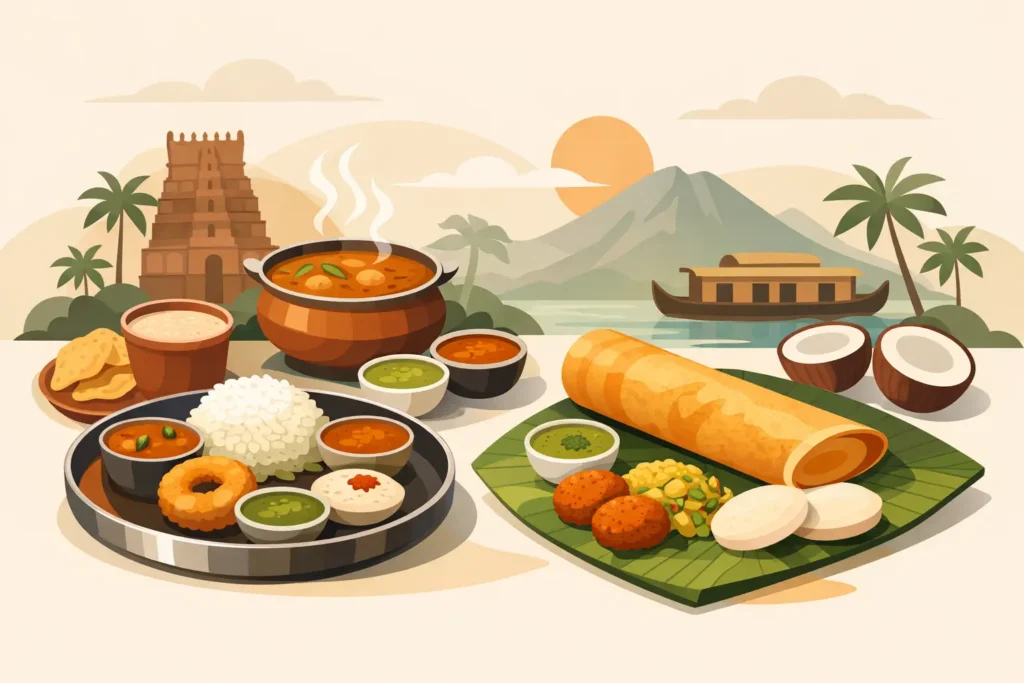
Steam rising off a plate of idlis, a dosa so crisp it cracks at the edges, sambar that hits warm, tangy, and spiced all at once – if you have ever loved that kind of meal, you have already felt the answer to what is South Indian cuisine.
It is not one single dish, one fixed spice mix, or one “type” of Indian food. South Indian cuisine is a huge, deeply rooted food culture shaped by the states of Tamil Nadu, Karnataka, Kerala, Andhra Pradesh, and Telangana. It is built around rice, lentils, coconut, tamarind, curry leaves, regional spices, and a cooking style that can feel light and comforting one minute, then bold and fiery the next. More than anything, it is food with rhythm – breakfast classics, snack cravings, family meals, tiffin culture, and everyday plates that people come back to again and again.
What Is South Indian Cuisine Made Of?
At its core, South Indian cuisine is defined by ingredients that create balance rather than heaviness. Rice is central, whether it shows up as steamed rice, fermented batter, rice flour, or soft rice-based dishes. Lentils are just as important. They bring body to sambar, structure to dosa and idli batter, and protein to many everyday meals.
Then come the flavor-builders. Coconut adds sweetness and texture. Tamarind brings sour depth. Mustard seeds, curry leaves, dried red chilies, green chilies, black pepper, cumin, coriander, and asafoetida layer in aroma and personality. A lot of South Indian food starts with tempering – hot oil meeting spices and curry leaves – and that simple move changes everything. It creates the kind of smell that makes people wander into the kitchen before the food even lands on the plate.
Fermentation also matters in a big way. It gives idlis their softness and dosas their signature tang. That is part of what makes the cuisine feel so alive. The food is not just seasoned well. It is developed through time, technique, and local habit.
Why South Indian Food Tastes So Different
One reason people keep asking what is South Indian cuisine is because the flavor profile feels distinct from the Indian food many non-South Indians first encounter. It often tastes sharper, brighter, and more layered. You get sourness from tamarind, nuttiness from lentils, freshness from coconut, heat from chilies, and fragrance from curry leaves all in one meal.
But the big detail is that it is not always spicy in the way people assume. Yes, some dishes from Andhra and Telangana can bring serious heat. But South Indian food is not defined by spice level alone. A good plate can be mild, soothing, and still full of character. Idli with coconut chutney is gentle. Curd rice is cooling. Vegetable upma can be subtle. Even sambar, which is bold, usually aims for balance rather than aggression.
That balance is the reason the cuisine works across the whole day. It can power a busy morning, carry a lunch, fix an evening snack craving, or feel like comfort food after a long day.
The Dishes Most People Know – And Why They Matter
If you are new to the cuisine, idli, dosa, vada, sambar, and chutney are the usual starting point. That is a great beginning, but it is only the beginning.
Idli is soft, steamed, and deceptively simple. It is made from a fermented batter of rice and lentils, and when it is done right, it feels light but satisfying. Dosa uses a similar batter, but turns into something entirely different – crisp, golden, and built for texture. Add a masala potato filling and it becomes one of the great comfort foods anywhere.
Vada brings contrast. It is fried, savory, and textured, often with a crisp outside and soft inside. Sambar ties a lot of meals together with its lentil base, vegetables, tamarind, and spice. Chutneys, meanwhile, are not side characters. Coconut chutney, tomato chutney, mint chutney, peanut chutney – each one shifts the whole plate.
Then there are dishes people outside the region sometimes overlook: upma, pongal, appam, uttapam, lemon rice, tamarind rice, curd rice, rasam, avial, and countless snack items that live somewhere between meal and craving. South Indian cuisine is full of foods that are practical, affordable, and deeply lovable without ever feeling boring.
What Is South Indian Cuisine Across Different States?
This is where things get interesting. South Indian cuisine is not a single uniform tradition. It changes from state to state, and even city to city.
Tamil Nadu is known for its strong tiffin culture, with dosa, idli, pongal, sambar, and a huge range of rice-based meals and snacks. The food often feels structured around everyday routine – breakfast counters, lunch meals, evening bites.
Karnataka brings variety that can be both comforting and sweet-savory in a very specific regional way. You will find dishes like bisi bele bath, neer dosa, and ragi-based staples, with cuisines that shift noticeably between Bengaluru, Mysuru, Mangaluru, and coastal areas.
Kerala leans heavily into coconut, seafood, appam, stew, puttu, and richly spiced preparations that still feel elegant rather than overworked. The influence of trade, coastlines, and local agriculture is obvious in every bite.
Andhra Pradesh and Telangana are famous for punchier heat, strong pickles, rice meals, and flavor that does not hold back. But even here, there is nuance. Not every dish is fiery, and a lot of the food is built around balance, not just chili.
So when someone asks what is South Indian cuisine, the most honest answer is that it depends on where you are eating, who is cooking, and what time of day it is.
More Than Food – It Is a Meal Culture
South Indian cuisine is also about how food is served and eaten. Many meals are designed around combination and flow. A dosa is not complete without chutney and sambar. A rice meal may move through dal, vegetable sides, rasam, curd, and pickles. Texture matters. Temperature matters. Contrast matters.
There is also a strong tiffin culture – lighter meals and snack-style eating that fit busy routines. That is part of why this cuisine still connects so well with students, office crowds, and anyone who wants something fast without feeling like they compromised on flavor. A plate of idli or a masala dosa can be quick, affordable, and still feel like real food.
That everyday ease is a huge part of the appeal. South Indian food does not need a special occasion to matter. It is built for repeat cravings. It becomes habit food in the best way.
Why It Works So Well in Modern Food Culture
South Indian cuisine fits right into the way people eat now. It can be classic, clean, comforting, portable, snackable, and highly customizable. It also leaves room for creativity.
That is why you now see South Indian flavors showing up in contemporary café menus, street-style mashups, and fusion comfort food. A masala dosa still wins on its own, but South Indian ingredients and formats also play well with global influences. Chutneys can sharpen sandwiches. Spice blends can level up rice bowls. Crispy dosas and soft idlis can sit comfortably beside modern snack culture without losing their roots.
The smart version of fusion respects the original structure. It does not flatten the cuisine into a gimmick. It keeps the soul – the fermented batters, the comfort-first thinking, the bold chutneys, the everyday accessibility – and then adds a new twist. That is part of what makes brands like Avant-Aroma connect with younger food lovers who want both authenticity and a little extra personality on the plate.
What Makes South Indian Cuisine So Craveable?
The short answer is contrast. Soft with crisp. Cool with spicy. Tangy with savory. Light dishes that still satisfy. Strong flavors that do not always feel heavy.
The longer answer is emotional. South Indian cuisine has a way of feeling both grounding and exciting. It can remind one person of home, introduce someone else to a whole new food world, and still feel casual enough for a breakfast run or a late-evening bite with friends. That range is rare.
It is also one of the few cuisines where comfort food and flavor-first food are often the same thing. You do not have to choose between something soothing and something vivid. A well-made plate gives you both.
If you are still wondering what is South Indian cuisine, think of it as a living food culture built on rice, lentils, coconut, spice, fermentation, and everyday ritual – but also as something more personal than a definition. It is the kind of food that turns into your regular order, your rainy-day fix, your post-class meal, your weekend plan, and your new favorite habit. The best way to understand it is not to memorize the dishes. It is to follow the craving and let the plate do the talking.