
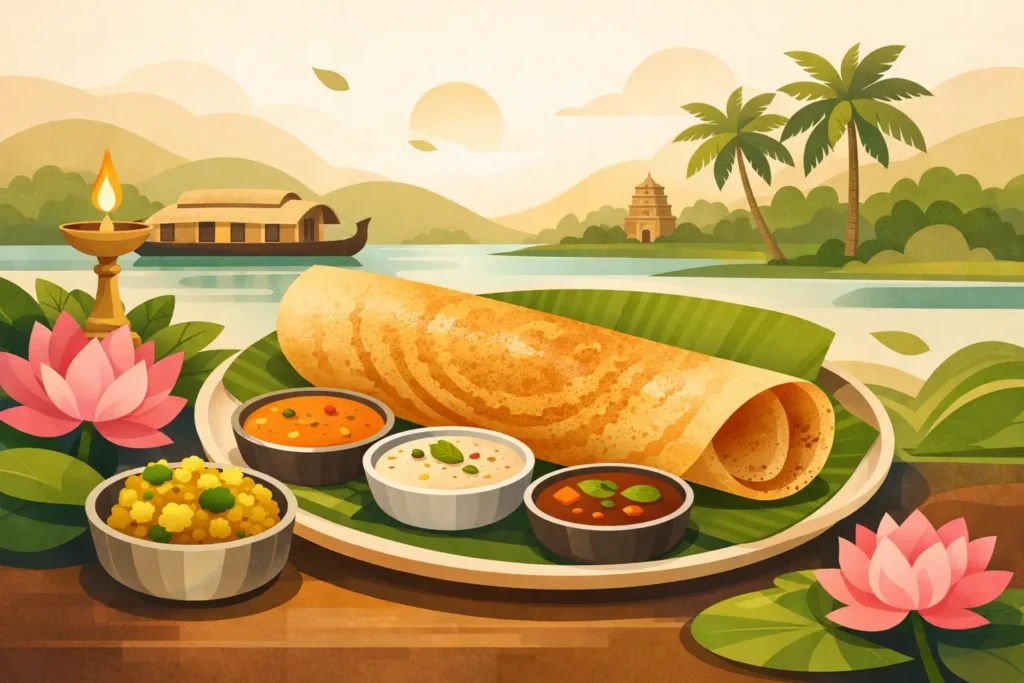
A hot dosa arrives with a sound before it makes an impression: that light, satisfying crackle as the crisp edge gives way. Then comes the contrast – a soft center, warm potato masala, bright chutney, and sambar that brings every bite together. That balance is exactly what makes dosa so popular. It is comfort food with energy, familiar enough for a regular breakfast and exciting enough to become the plan for a late-evening catch-up.
Dosa does not need a complicated pitch. It looks inviting, tastes layered, and lets you eat at your own pace. Tear off a piece, scoop up a little filling, choose your chutney mood, and suddenly an everyday meal feels like a full flavor experience.
What Makes Dosa So Popular Across Generations?
At its heart, dosa is beautifully simple: a fermented rice-and-lentil batter spread thin on a hot griddle until it turns golden and crisp. But simple does not mean plain. Fermentation gives the batter a gentle tang and a deeper aroma, while the hot griddle creates the toasted texture people crave.
That texture is a huge part of the obsession. A great dosa is not just crispy from edge to edge. It has character: delicate, lacy corners; a warm, tender middle; and enough structure to hold a scoop of filling without falling apart. It is the kind of contrast that keeps your hand reaching back for one more piece.
The classic masala dosa adds another layer of comfort. The potato filling is soft, warmly spiced, and savory, giving the crisp outer layer a cozy center. On its own, the dosa is light and tangy. With masala, it becomes more filling and more memorable. That is why it works for a quick morning meal, a proper lunch, or the craving that hits when the group cannot decide where to eat.
There is also a sense of ritual built into it. Dosa is made to be shared around a table, passed between conversations, and enjoyed with sides that invite mixing and matching. It can feel nostalgic to someone who grew up with it and totally new to someone trying it for the first time. Few dishes pull off both so naturally.
The Real Magic Is in the Sides
A dosa without accompaniments can still be delicious, but chutney and sambar turn it into a full-on flavor situation. Each one changes the experience without changing the dosa itself.
Coconut chutney brings coolness and creaminess. Tomato chutney can add tang and a little heat. A brighter herb-forward chutney can cut through the warmth of the potato filling. Then there is sambar: rich, aromatic, and made for dipping. One piece of dosa dipped in sambar is soft, juicy, and deeply comforting. The next piece dipped in chutney is sharp and fresh. Same plate, completely different vibe.
This variety is one reason dosa never gets boring. People have strong opinions about their preferred dip, their ideal crispness, and whether the filling should be tucked inside or scooped up alongside. That personal choice makes the meal feel interactive rather than fixed.
For students between classes or friends meeting after work, that matters. A dosa plate is easy to share, easy to talk over, and packed with enough variety to keep the table engaged. It is not just a meal that disappears in five minutes. It gives people a reason to linger.
It Fits Real Life, Not Just One Mealtime
Some foods are tied to a single occasion. Dosa has range. It can be a calm breakfast with coffee, a fast lunch that does not feel boring, a snack after a long day, or a late-night comfort order when only something warm and crispy will do.
Part of that flexibility comes from how satisfying it feels without being overly heavy. A plain dosa can be light and snackable, while a masala dosa brings more staying power. Add a bowl of sambar and a couple of chutneys, and the meal feels complete. It depends on the appetite, the hour, and the mood.
That adaptability also makes dosa a smart choice for busy urban routines. It is quick enough for a lunch break yet feels more intentional than grabbing something random. When cravings strike, people want food that delivers texture, warmth, and real flavor right away. Dosa checks all three boxes.
In a city like Dehradun, where college schedules, workdays, rainy afternoons, and casual meetups can all shape a food decision, that all-day appeal is a big deal. Dosa can meet the moment without asking people to compromise between comfort and excitement.
Tradition Gives Dosa Its Staying Power
Dosa has deep roots in South Indian food culture, and that history matters. It is not popular because it is trendy for a season. It has lasted because the method works: carefully prepared batter, patient fermentation, skilled griddle work, and flavor combinations that feel balanced rather than loud for the sake of it.
A well-made dosa respects those fundamentals. The batter needs the right consistency. The griddle needs the right heat. Spread it too thick and it loses its signature crispness; spread it too thin and it can become fragile. The timing matters too. The best versions look effortless, but they come from practice.
That craft creates trust. When people order dosa, they know what kind of comfort they are looking for. They expect warmth, aroma, crisp edges, and a plate that feels generous. The details may shift from kitchen to kitchen, but the core feeling remains.
Why Dosa Still Feels Fresh
The best part about dosa culture is that it has room to play. The classic version will always have its place, but its blank-canvas quality makes it a natural fit for newer flavor combinations too. Cheese, bold sauces, spicy toppings, and street-style fillings can bring a playful twist while the dosa base keeps the experience grounded.
The trade-off is simple: fusion works best when it adds to the dosa rather than hiding it. If the filling is too wet, the crispness disappears. If the toppings are too intense, the tangy batter and toasted notes get lost. A great modern dosa still lets the dosa taste like dosa.
That is what makes it such a natural favorite for a flavor-forward generation. People want familiar foods with a little surprise. They want a dish that photographs well, tastes even better, and feels worth telling friends about. Dosa can do all of that without trying too hard.
At Avant-Aroma, that spirit lives in the space between classic masala comfort and the thrill of a fresh flavor twist. It is rooted food for people who want their everyday cravings to feel more colorful.
A Plate Built for Connection
There is a social quality to dosa that is easy to overlook. It is usually served hot, which means everyone notices when it reaches the table. The aroma travels. The chutneys invite commentary. Someone inevitably asks for an extra dip of sambar or claims the crispiest corner.
That makes dosa more than a convenient meal. It becomes part of the hangout. It suits quick solo breaks, but it shines when friends are swapping bites, comparing chutneys, and making plans over a plate that feels both comforting and fun.
The next time you are choosing what to eat, follow the craving for contrast: something crisp, soft, tangy, warm, and made to be dipped. A good dosa does not just fill the gap between meals. It gives the moment a little more flavor, a little more comfort, and a reason to come back for another bite.