
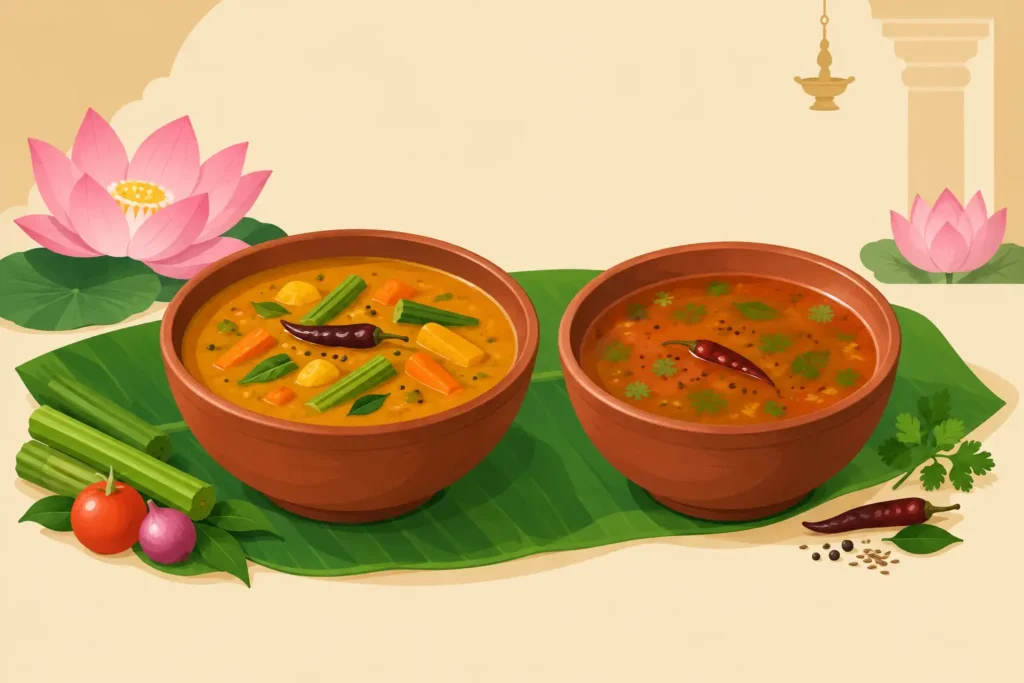
A plate of soft idlis can feel completely different depending on what lands beside it. That is where sambar versus rasam differences become deliciously clear: one is hearty, filling, and built for scooping, while the other is light, tangy, peppery, and made for a quick flavor rush. Both belong on a South Indian comfort-food table, but they bring very different energy.
If you have ever wondered why one bowl feels like a satisfying meal partner while another feels like a warm, zesty reset, you are already asking the right question. Sambar and rasam may share familiar notes of tamarind, spices, and curry leaves, yet their texture, ingredients, and role on the plate are not the same.
Sambar Versus Rasam Differences at a Glance
Sambar is a thicker lentil-and-vegetable stew, usually served as a substantial side with idli, dosa, vada, or rice. Rasam is a thinner, soup-like preparation with a bright tang and a lively kick from spices such as black pepper and cumin. Think of sambar as comfort with staying power, and rasam as a burst of warmth that wakes up the palate.
The simplest way to remember the distinction is this: sambar is meant to coat, scoop, and satisfy. Rasam is meant to pour, sip, and refresh. Of course, every home, region, and kitchen has its own signature version, so there is no single rulebook that covers every bowl.
What Makes Sambar So Comforting?
Sambar gets its depth from cooked lentils, most often pigeon peas, blended into a thick base with tamarind, a spice mix, and vegetables. The final bowl can include pumpkin, carrots, drumsticks, onions, tomatoes, eggplant, or whatever the season and kitchen call for. That flexibility is part of its charm.
The flavor is rounded rather than sharp. Tamarind brings tang, while lentils add a mellow, earthy backbone. Mustard seeds, curry leaves, dried red chilies, and asafoetida in the tempering add fragrance and a little drama right at the finish. A good sambar feels layered: tangy, savory, gently spicy, and deeply satisfying.
Its consistency matters. Sambar is thick enough to cling to a piece of dosa or soak beautifully into fluffy idli. It turns a simple breakfast into a full-on comfort ritual and gives rice enough body to become a complete, cozy bowl. When your craving says, “I need something filling,” sambar understands the assignment.
Why sambar pairs so well with idli and dosa
Soft idlis are mild and delicate, which makes them perfect for absorbing a generous spoonful of sambar. The porous texture catches every bit of lentil richness and spice. With dosa, sambar adds a soft, tangy contrast to the crisp edges and warm center of the crepe.
There is also a practical reason this pairing works so well. Sambar holds its own on a busy plate. It brings substance alongside chutneys, supports a rice meal, and makes a snack feel more satisfying when hunger is not playing around.
What Gives Rasam Its Bright Kick?
Rasam is lighter in texture but never short on personality. It is typically made with a tamarind base, tomatoes, black pepper, cumin, coriander, curry leaves, and a fragrant tempering. Some versions use lentil water for a touch more body, while others remain clear, quick, and intensely aromatic.
Where sambar develops slow, comforting fullness, rasam delivers contrast. The tang hits first, followed by peppery warmth and the earthy perfume of cumin. It can be gentle or fiery, tomato-forward or tamarind-led, depending on the recipe. Either way, rasam has that unmistakable “one more spoonful” effect.
Its thin consistency is not a lesser version of sambar. It is the point. Rasam is designed to flow over rice, cut through richer flavors, and feel light enough for moments when you want comfort without heaviness. Many people also love sipping it warm from a bowl, especially when they want something soothing, spicy, and fragrant.
Rasam is about aroma as much as taste
A fresh rasam announces itself before the first bite. You smell pepper, curry leaves, cumin, and tangy tomato or tamarind rising from the bowl. That aromatic lift makes it feel especially exciting on a meal tray with milder dishes.
It also creates a different rhythm at the table. Sambar is often the grounding bowl. Rasam is the bright spark that keeps each bite interesting. Together, they show how South Indian food can be deeply comforting without ever becoming one-note.
The Biggest Difference: Texture and Purpose
The most noticeable difference between the two is thickness. Sambar is thick, textured, and often packed with vegetables. Rasam is thin, pourable, and usually smoother, even when it includes tomato bits or spices.
That changes how each one is eaten. Sambar works beautifully as a dip for idli, dosa, and vada, or as a hearty companion for rice. Rasam is commonly mixed with rice or enjoyed as a light, warming bowl. Neither is limited to one way of eating, though. Food rules are useful until a craving makes a better suggestion.
Their purpose on the plate also differs. Sambar can carry a meal with its lentils and vegetables. Rasam is often the palate-lifting layer that adds brightness after richer bites. If sambar is the friend who makes sure everyone is fed, rasam is the friend who brings the fun conversation.
Spice Profiles: Deep vs. Punchy
Both dishes use South Indian pantry staples, but the spice balance shifts the experience. Sambar often relies on a roasted spice blend that may include coriander seeds, chilies, fenugreek, cumin, and lentils. This creates a deeper, warmer flavor with a toasted character.
Rasam leans more heavily into black pepper, cumin, and tangy ingredients. The result is sharper and more immediate. You may feel the pepper warmth at the back of the throat, especially in a bold rasam, while sambar’s heat usually sits more comfortably within its thicker lentil base.
This is why choosing between them depends on the moment. Want a comforting, substantial flavor with your breakfast? Reach for sambar. Want something lively that makes plain rice feel electric? Rasam is the move. Want both? That is not overdoing it. That is excellent table planning.
Which One Should You Order With Your Craving?
Choose sambar when you want a fuller, more meal-like companion. It is ideal with idli and dosa, especially when you are hungry enough to want every bite to feel satisfying. Its lentil base and vegetables create the kind of comfort that works for breakfast runs, lunch breaks, and those moments when only familiar flavor will do.
Choose rasam when you are in the mood for warmth with a lighter feel. It is a great match for rice, a welcome reset between bold bites, and a smart pick when peppery tang is calling your name. It can feel especially good on a rainy Dehradun day, when a steaming bowl and a little spice are exactly the vibe.
At Avant-Aroma, that contrast is part of the fun of South Indian comfort food. One bowl can bring slow, satisfying depth; another can bring a quick, aromatic spark. There is room for both on the table and plenty of reasons to come back for the pairing.
Why Neither Bowl Has Just One “Authentic” Version
Sambar and rasam are rooted in tradition, but tradition is not frozen. Recipes vary across South India and from one family kitchen to another. One sambar may be sweeter from pumpkin, another more tangy from tamarind, and another more spice-forward. Rasam can be tomato-rich, pepper-heavy, garlic-scented, or gently balanced with lentil water.
That variation is not confusion. It is flavor culture in action. The best version is often the one that tastes like someone cared enough to get the tempering just right, adjust the tang, and serve it hot.
So the next time your plate arrives with idlis, dosa, rice, chutney, and a pair of steaming bowls, do not treat sambar and rasam as interchangeable. Let the thick, comforting spoonful of sambar settle the craving, then let rasam bring its bright little jolt of joy. A great meal does not force you to pick one favorite – it gives you a reason to enjoy both.