
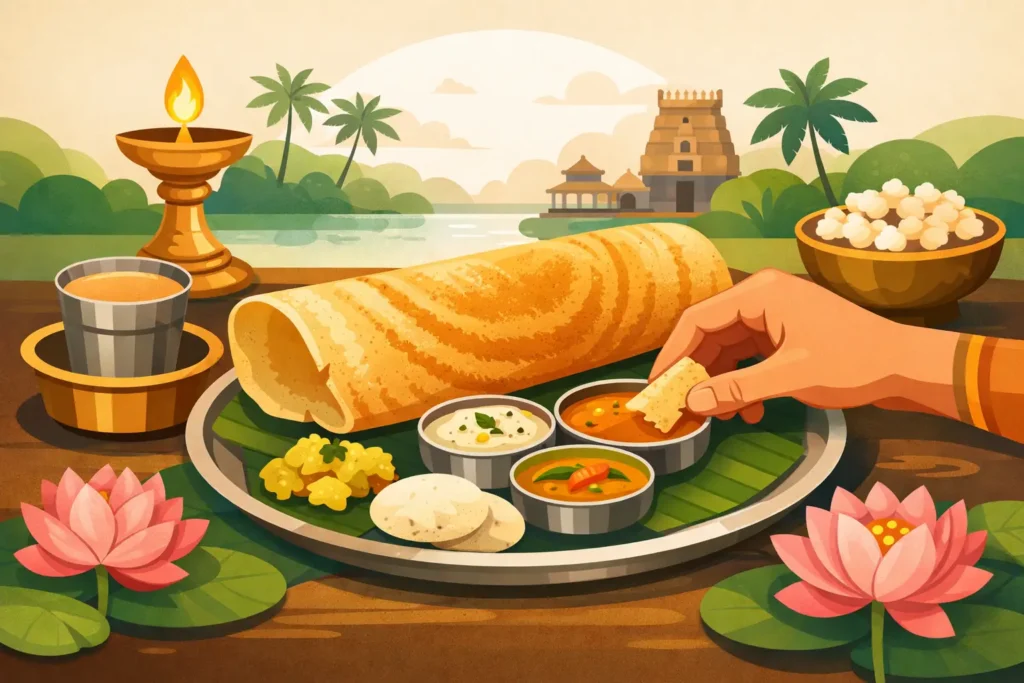
That first crackle matters. If you have ever waited for a dosa, watched it arrive golden and glorious, then somehow ended up with a soft, limp last few bites, you already know why people search for how to eat dosa crispy. The good news is that crispy dosa is not just about how it is cooked. It is also about how you serve it, pair it, and eat it in those first few minutes.
Dosa is one of those comfort foods that can feel classic, street-style, and seriously craveable all at once. But crispness is a small window. Miss that window, and the whole vibe changes. If you want every bite to keep that signature snap, here is what actually makes the difference.
How to eat dosa crispy starts with timing
Crispy dosa waits for no one. The fastest way to lose texture is to let it sit too long after it comes off the griddle. Steam gets trapped, fillings release moisture, chutneys warm up the surface, and what started with a light crunch turns chewy.
So the first rule is simple – eat it fresh. Not in ten minutes. Not after the perfect photo angle. Fresh means when it hits the table, you are ready.
This is why dosa feels so alive as a dining experience. It is not passive food. It asks for attention. The best bite usually happens early, when the edges are still brittle, the center is warm, and the aroma from the toasted batter is at its strongest.
If you are ordering in, this gets even more real. Travel time softens crispness. A dosa packed in a closed container traps heat and moisture, which is great for warmth but bad for crunch. If you want the crisp version at home, open the package right away, let excess steam escape, and eat it immediately.
The best way to break a dosa without losing the crunch
A lot of people tear into dosa from the middle, especially if there is masala inside. That works if you only care about the filling. But if crispness is the goal, start from the outer edge.
The edges are usually the thinnest and crispest part. Break off a piece while it is still light and crackly, then work your way inward. This gives you a better texture gradient in every bite instead of crushing the delicate parts under your hand while reaching for the center.
Use your fingers, not cutlery. Dosa is built for touch. A fork presses too much steam into the surface and can flatten the crisp structure. Eating with your hands gives you more control over how much chutney or sambar touches each piece.
That last part matters more than people think.
Dip, do not soak
If you want to know how to eat dosa crispy without ruining it halfway through, this is the move: dip lightly, eat fast.
Chutney and sambar are there to boost flavor, not drown the dosa. A quick swipe through coconut chutney or tomato chutney keeps the outside crisp while adding contrast. A full soak turns the bite soft almost instantly.
Sambar is where people usually go too far. It is comforting, rich, and hard to resist, but it is also the fastest route to a soggy dosa. Instead of pouring sambar over the whole thing, tear one bite, dip just the tip, and eat it right away.
There is also a taste trade-off here. Too much chutney or sambar can blur the toasted flavor of the dosa itself. And that toasted flavor is half the magic. Crisp dosa should still taste like dosa, not only like what you dipped it in.
If there is masala inside, pace matters
Masala dosa is a favorite for a reason. The crispy shell and soft spiced potato filling create that hot-cold, crisp-soft contrast people come back for. But filling changes the moisture level from the inside out.
The longer a masala dosa sits, the faster the shell softens around the filling. So if you are eating masala dosa, do not open it fully and let all the steam out at once. Break and eat section by section.
That keeps each part fresher for longer. It also helps you balance texture better. You can take one bite with more crisp shell, another with a little more masala, and keep the experience lively instead of heavy.
If you love extra chutney with masala dosa, keep it on the side. Never spread it across the entire surface unless you are fine giving up crunch.
Plate setup can make or break crispness
This sounds small, but the plate matters. A dosa sitting flat on a plate with puddled chutney nearby is already at risk if the sauces start touching it. Once the underside gets wet, that crisp bottom layer is gone.
The smartest setup is simple. Keep chutneys and sambar in separate bowls if possible. Give the dosa space. If you are sharing, do not stack pieces on top of each other because trapped heat softens them fast.
At home, avoid covering dosa after serving. People cover food to keep it warm, but with dosa, covered warmth often means trapped steam. And trapped steam is the enemy of crunch.
This is also why restaurant-fresh dosa hits differently. When served right off the griddle with space to breathe, it stays crisp long enough for a proper first round of bites.
How to eat dosa crispy at home
Fresh from a restaurant is the dream, but home dosa can still be excellent if you handle it right.
The first thing is serving order. Make the chutneys and sambar ready before the dosa comes off the pan. Once the dosa is done, serve and eat. Do not cook three or four and stack them. Stacking traps steam between layers and softens all of them.
If you are making dosa for a group, cook and serve in a rhythm. One comes off, one gets eaten, next one goes on. It feels more interactive, and honestly, that is part of the fun.
If you are reheating leftover dosa, manage expectations. It can become pleasantly firm again, but that just-made crispness is hard to fully bring back. A pan reheat is better than a microwave because microwaves add softness. Reheat dry, on low to medium heat, and avoid covering it.
The crispness also depends on what kind of dosa you ordered
Not every dosa is meant to crackle the same way. Some are thinner and built for maximum crunch. Some are slightly thicker with a softer center. Some fusion styles lean into fillings, cheese, sauces, or layered flavors, and those naturally shift the texture.
That does not make one better than another. It just means crispness is not a one-size-fits-all expectation.
If your goal is pure crunch, go for a dosa style known for a thin spread and strong roast. If your goal is a more loaded, comfort-heavy plate, expect a softer bite in some sections. The best food moments are often about choosing the texture you are actually craving instead of chasing a rule.
At a place like Avant-Aroma, where South Indian comfort food meets bold flavor energy, that balance is part of the appeal. Some days you want classic crisp edges and coconut chutney. Some days you want a more indulgent, street-style spin. Both can be great. You just eat them differently.
Common mistakes that ruin a crispy dosa
Most soggy dosa situations come down to a few habits. Waiting too long is the big one. Pouring sambar on top is another. Packing it too tightly for takeaway, stacking dosas, or cutting the whole thing open before eating also speeds up softening.
There is also the mistake of chasing heat over texture. Super-hot closed packaging keeps food warm, but with dosa, too much trapped heat creates condensation. If crispness matters most, a little airflow is better than maximum steaming.
And then there is overloading each bite. Dosa is all about balance. Too much chutney, too much filling, too much sauce, and the crisp shell stops being the star.
Crispy dosa is really about contrast
What makes dosa addictive is not just crunch on its own. It is the way that crunch meets cool chutney, warm sambar, soft masala, and the deep roasted flavor from the pan. When you eat it well, every bite feels layered but still light.
That is why the answer to how to eat dosa crispy is not a rigid rulebook. It is a timing game, a texture game, and honestly, a little bit of self-control. Eat it fresh. Break from the edges. Dip lightly. Keep sauces separate. Let each bite do its thing before the next one lands.
A good dosa does not ask for much. Just a little speed, a little attention, and the kind of appetite that knows crunch is worth showing up for.