
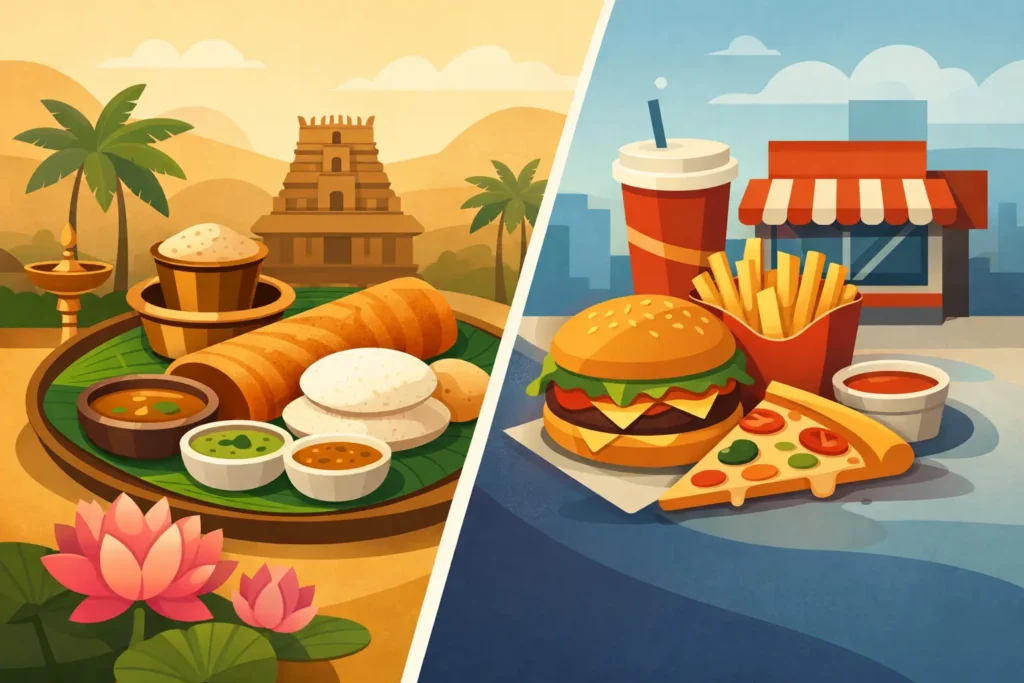
Some breakfasts leave you full for an hour. Others carry you through classes, commutes, meetings, and that random 11:30 craving without turning your morning into a food regret story. That is exactly why south indian breakfast vs fast food is more than a casual food debate. It is really about how you want to feel after the first meal of the day – rushed and heavy, or satisfied, steady, and ready for what comes next.
For a lot of people, fast food wins on speed and convenience. You can grab it quickly, eat it on the go, and move on. No argument there. But when the goal is a breakfast that feels comforting, flavorful, and actually worth waking up for, South Indian classics bring something different to the table. They are fast in their own way, but they also feel lighter, fresher, and more complete.
South Indian breakfast vs fast food: what people are really choosing
At first glance, this looks like a simple comparison between traditional food and modern grab-and-go meals. It is not that simple. Most people are choosing between two moods.
Fast food is built for urgency. It fits the late start, the rushed ride, the ten-minute break between tasks. It is often rich, salty, cheesy, and instantly satisfying. That can hit the spot, especially when you want comfort fast.
South Indian breakfast is built around rhythm. Idlis, dosa, sambar, and chutneys feel like real morning food. They wake up your appetite without overwhelming it. The textures matter. The warmth matters. Even the variety on one plate matters. You are not just eating something quick. You are eating something that feels put together.
That difference becomes obvious by mid-morning. A breakfast that tastes exciting but sits too heavy can slow your whole day down. A breakfast that gives you flavor without that drag tends to become a habit.
Why South Indian breakfast feels lighter but still satisfying
This is where South Indian breakfast quietly wins a lot of people over. It does not rely on intensity alone. It balances softness, crispness, spice, and comfort in a way that feels complete.
Take idlis. Soft, warm, and easy to eat, they are the kind of breakfast that feels gentle but not boring. Add sambar and chutney, and suddenly the plate has depth. You get heat, tang, creaminess, and that home-style comfort people keep coming back for.
Then there is dosa. A good masala dosa gives you contrast in every bite – crisp outside, savory filling inside, with sides that change the experience depending on what you scoop up next. It is satisfying in a way that does not feel one-note.
Fast food often goes big on one dominant flavor profile. That can be fun, especially for a quick indulgence, but it is not always the best fit for the first meal of the day. South Indian breakfast tends to feel more balanced, and that matters when breakfast is supposed to fuel your morning rather than hijack it.
Taste is not the only thing on the plate
People do not choose breakfast based on flavor alone, even if flavor gets all the attention. They also choose based on cost, mood, convenience, and how the meal fits the rest of the day.
If you are a student heading to campus, your breakfast needs to work hard. It should taste good, feel filling, and not leave you sluggish halfway through your first class. If you are a young professional, you probably want something quick enough for a busy morning but satisfying enough to keep you from hunting for snacks an hour later.
This is where South Indian breakfast has a real everyday advantage. It is comfort food, but it is functional comfort food. It gives you warmth and flavor without feeling like too much too early.
Fast food still has a place. Sometimes the craving is very specific. Sometimes you want something rich, familiar, and instant. Sometimes your schedule is chaos and convenience wins. But when breakfast becomes a daily pattern, the meals that feel easier to return to usually come out on top.
South Indian breakfast vs fast food on busy mornings
Busy mornings are where fast food makes its strongest case. You can order quickly, pick something familiar, and be done. For people juggling alarms, deadlines, and commute pressure, that convenience is real.
But South Indian breakfast is not the slow, formal option people sometimes imagine. In a casual dining and takeaway setting, it can be just as practical. The difference is in the experience after the first few bites. A plate of idli-sambar or a masala dosa often feels like a smart quick meal instead of a compromise meal.
That distinction matters. Nobody wants breakfast that feels like damage control. The best quick meals still feel intentional. They still feel like they belong to the morning.
There is also the question of repeatability. Fast food can be exciting as an occasional craving. South Indian breakfast often works better as an everyday favorite. It has the kind of flavor comfort that stays appealing even when you order it regularly.
The comfort factor: familiar vs craveable
Fast food is engineered to be craveable. That is part of its appeal. The flavor hits hard and fast, and when you want maximum indulgence, it delivers.
South Indian breakfast is craveable too, just in a different way. Its pull is less about overload and more about satisfaction. It is the kind of food people miss when they have not had it in a while. Not because it is flashy, but because it lands emotionally. It tastes familiar, grounding, and complete.
That comfort is a big reason these dishes stay relevant across generations while still feeling fresh to younger diners. A dosa does not need to be reinvented every week to stay exciting. It already has the contrast, aroma, and personality that make people order it again.
And when brands bring in a little modern energy – whether that is sharper presentation, fusion-side options, or a menu that lets you move from idli to toast to pasta depending on your mood – the breakfast story gets even better. You do not have to choose between tradition and current cravings. You can have both in the same food culture.
Where fast food still wins
To be fair, fast food is not losing every round here. If you want maximum portability, highly standardized taste, or a very specific indulgent craving, it can absolutely be the right choice.
It also fits social spontaneity. Sometimes you are not looking for a mindful breakfast. You are looking for a fun, easy bite with friends before heading out. In that moment, the answer is not about what is lighter or more balanced. It is about what suits the vibe.
Price can also shift the decision depending on what and where you order. Not every South Indian breakfast plate is cheaper than every fast food option, and not every fast food meal is heavy. Context matters.
So the better question is not which category is always better. It is which one works better for your morning, your appetite, and your routine.
The smarter everyday choice
If breakfast is something you grab once in a while, fast food can do the job. If breakfast is part of your actual lifestyle – your campus run, your office stop, your post-gym refuel, your comfort ritual before a long day – South Indian breakfast usually gives you more of what you need.
It brings flavor without chaos. It feels satisfying without being too much. It turns a rushed meal into something a little more grounded, and that changes the mood of the whole morning.
That is why so many modern food spots are leaning into South Indian comfort with a fresh, youthful edge. Places like Avant-Aroma get that today’s diner wants both speed and soul, both familiarity and flavor. Soft idlis, crisp masala dosa, bold chutneys, and warming sambar do not feel old-school when they are served with energy and intention. They feel like your new favorite habit.
So when you think about south indian breakfast vs fast food, do not just ask what is quickest. Ask what you will actually want again tomorrow. The best breakfast is not the one that simply fills time. It is the one that fits your life, lifts your mood, and keeps the cravings coming back for the right reasons.