
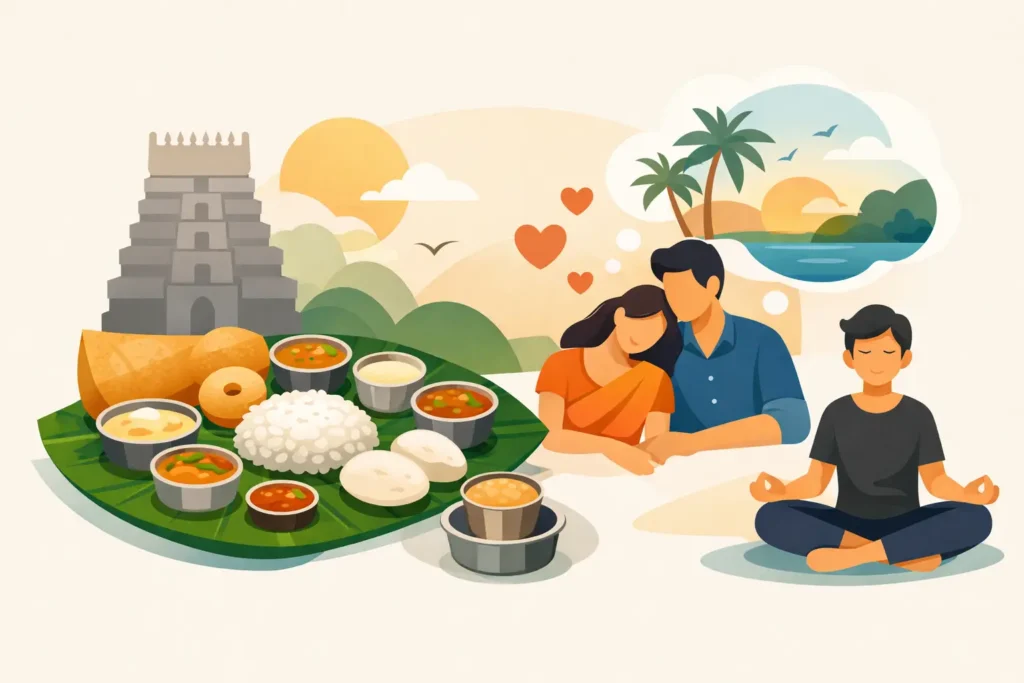
Descriptions of food should make you hungry before the plate even lands. Not just because the food looks great, but because it carries texture, aroma, comfort, heat, and that hard-to-fake feeling of being fed properly. South Indian food is not one-note spicy, and it is definitely not limited to dosa and idli. It is layered, balanced, and full of contrast – soft with crisp, mellow with fiery, familiar with surprising.
For a lot of people, the first memory starts with breakfast. A hot dosa arrives folded and golden, the edges thin and crackly, the center still warm with steam. Beside it, sambar brings depth, chutney brings lift, and suddenly the whole meal feels bigger than a single dish. That is the magic of South Indian comfort food. Every element matters, and every bite changes depending on what you pair together.
What south indian food captures
If you are trying to describe South Indian food well, the first thing to avoid is flattening it into one idea. It is not just spicy food, and it is not just fermented food. The real character comes from contrast. A proper description should talk about softness, crispness, tang, warmth, roasted notes, coconut richness, curry leaf aroma, mustard seed crackle, and the way simple ingredients turn into big flavor.
It should also capture how the food feels. South Indian meals are often satisfying without feeling too heavy. Even rich dishes usually carry brightness from tamarind, tomatoes, fresh herbs, or chutneys. Fermented batters bring a mild tang and airy texture. Lentils add body. Rice gives structure. Spices do not just bring heat – they bring personality.
That is why a plain label like “rice-based cuisine” misses the point. South Indian food is deeply sensory. You hear the tempering hit hot oil. You smell ghee, curry leaves, and roasted spices before you sit down. You break into something crisp and get something soft underneath. It is comfort food with movement.
The flavor profile behind South Indian food
The easiest way to understand the cuisine is through balance. South Indian food often plays with six things at once – tang, spice, salt, nuttiness, freshness, and warmth. Depending on the dish, one note may lead, but the best versions never feel flat.
Take sambar. It is not simply a lentil stew. A strong sambar is savory, lightly tangy, gently spiced, and deeply aromatic. It has body from lentils, brightness from tamarind, sweetness from vegetables, and a finish shaped by tempered mustard seeds, dried chilies, and curry leaves. It can be soothing on a slow morning or seriously satisfying in the middle of a rushed day.
Now think about coconut chutney. On paper, it sounds subtle. On the plate, it changes everything. It cools down sharper flavors, adds creaminess, and gives dosa or idli a softer landing. Then a tomato chutney or spicy red chutney steps in and shifts the mood completely. Same base meal, totally different energy.
This is where South Indian food becomes addictive. It is interactive. You do not just eat one item. You mix, dip, tear, scoop, and combine. Every bowl and every side creates a new version of the bite.
Texture is half the story
A real south indian food is a fusion of textures, because texture is where a lot of the joy lives.
Idlis are the perfect example. A well-made idli should be soft, springy, and light, never dense or dry. It should absorb sambar without falling apart and feel gentle enough for breakfast but still satisfying enough to quiet serious hunger. It is one of the simplest dishes to look at and one of the easiest to get wrong.
Dosa moves in the opposite direction. It is all about the crisp edge, the lacy spread, and the roasted flavor that comes from a batter cooked just right. Some dosas are thin and shattery. Some are slightly thicker with a more tender center. Add masala inside, and now you get another layer – spiced potato filling that is earthy, savory, and comforting.
Then there are medu vadas, which bring a different kind of pleasure. Crisp outside, fluffy inside, with a savory depth from lentils and spices, they sit somewhere between snack and meal. Paired with chutney and sambar, they stop feeling simple very quickly.
More than breakfast food
One reason South Indian food gets boxed in is because many people first meet it at breakfast. That is only part of the picture.
Yes, it shines in the morning. Idlis, dosas, vadas, upma, and pongal are all built for that first-meal comfort people crave. They are warm, filling, and deeply reassuring without being too much. But the same flavor language works beautifully across lunch, snack breaks, and late-evening cravings.
Rice bowls, curd-based dishes, lentil stews, podi-seasoned snacks, and tiffin-style plates all show how versatile the cuisine is. Some meals are light and clean. Others are rich and indulgent. Some are ideal when you need focus before class or work. Others feel made for hanging out with friends and stretching a meal into a whole vibe.
That flexibility is part of why the cuisine stays relevant. It fits real life. Quick bite, full meal, comfort order, casual meet-up, rainy-day craving – South Indian food handles all of it with ease.
Tradition and modern cravings can share a table
Here is where things get even more interesting. South Indian food is rooted in strong traditions, but it also adapts incredibly well to modern flavor culture. Crisp dosas can carry classic masala or bolder fillings. Chutneys can stay familiar or lean fiery. Rice and noodle bowls can borrow from street-style influences while still holding onto the warmth and structure people love in South Indian meals.
That balance matters, especially for younger diners who want food that feels authentic but not frozen in time. A lot of students and young professionals are not choosing between tradition and novelty. They want both. They want a meal that feels like comfort and still gives them something exciting enough to come back for tomorrow.
That is exactly why fusion works when it is done with respect. If the base flavors are solid, a modern twist does not erase identity. It adds a new layer. At Avant-Aroma, that idea lands naturally – soft idlis, masala dosa, sambar, chutneys, and snack-forward bowls all fit into the same flavor story because the foundation is still comfort, warmth, and craveability.
At Avant, Food is Conversation
The difference between food that doesn’t create conversation and a memorable meal usually comes down to wether the experience creates “crispy dosa with chutney” within your thoughts, or it creates a mouth-watering story of “a paper-thin dosa with golden crisp edges, a warm center, and a savory potato masala that turns rich and comforting when dipped into tangy sambar”. Yum!! At Avant, we want it to be the latter!
The same goes for idli. Instead of “steamed rice cakes,” you want to experience our “cloud-like, lightly tangy rounds that soak up sambar and pair beautifully with coconut chutney.” That sounds like food you want now, not a menu item you skim past.
For sambar, we don’t want you to have “spicy lentil soup.” but want you to enjoy a thicker, more layered, and more aromatic than that phrase suggests. Chutneys make the perfect accompaniment whether they are cooling, nutty, fresh, smoky, or fiery. We want food that is tasty and creates cravings for times you are hungry again.
It also helps people who are new to the cuisine. The best paired food do not intimidate. They guide. They make the unfamiliar feel exciting instead of confusing.
Why we want you to come back for more
At Avant-Aroma we strive to create dishes that burst with flavor, but the deeper reason we want you to return is emotional. Even simple plates often arrive with multiple accompaniments, different textures, and enough variety to keep every bite interesting. You do not get a flat experience. You get a conversation between flavors.
It also has that rare quality of being both dependable and never boring. You know an idli-sambar combo will comfort you. You know a masala dosa will satisfy. But depending on the chutney, the batter, the spice level, the filling, or the side, the experience still changes.
That is what makes the cuisine ideal for repeat cravings. It can become a habit without becoming dull. It works for solo meals, group orders, quick takeaway runs, and those nights when you want food that feels like it understands your mood.
Talk about the warmth, the crispness, the tang, the aroma, the comfort, and the little side pairings that change everything. We want every visit to us feel alive, the food already has a head start – and honestly, the time you put aside to visit us deserves nothing less.
We are obsessed with making good food. Make enjoying it at Avant-Aroma your regular habit. 🪷