
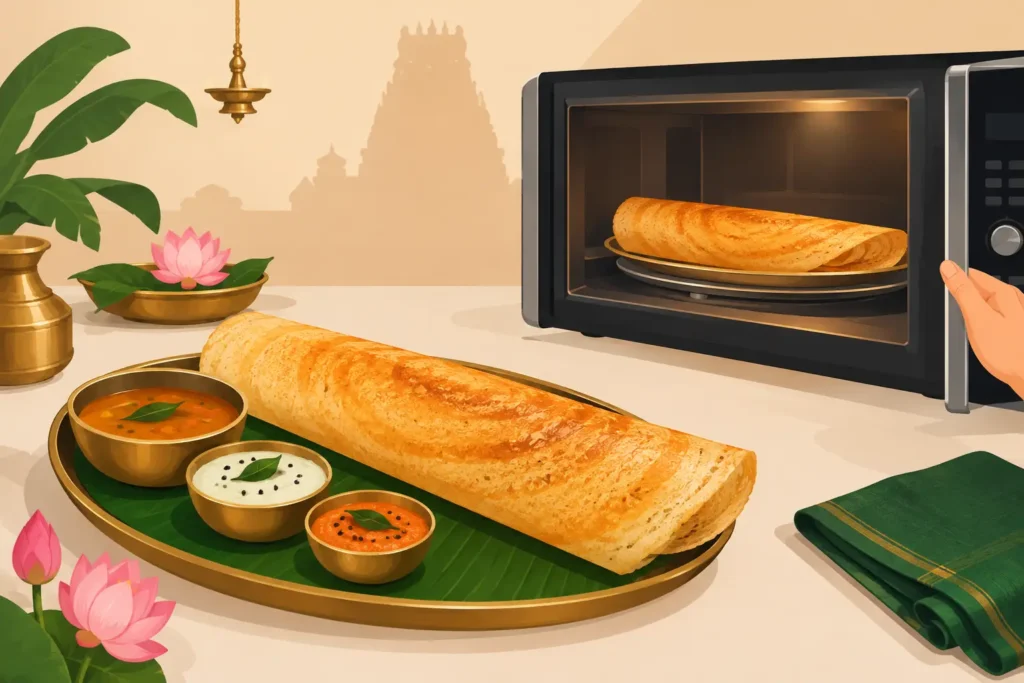
That leftover masala dosa deserves better than a sad, rubbery microwave comeback. When you know how to reheat masala dosa the right way, the crisp golden shell returns, the spiced potato center warms through, and your next bite still feels like a proper comfort-food moment.
Masala dosa is built on contrast: a thin, crackly exterior around a soft, fragrant filling. Reheating it is less about blasting it with heat and more about bringing those two textures back into balance. The best method depends on what you have in the kitchen and how crispy you want your dosa to be.
Why Masala Dosa Gets Soft in the Fridge
A freshly made dosa stays crisp because steam escapes quickly from its surface. Once it is packed away, that steam gets trapped and turns into moisture. By the next day, the dosa has absorbed some of that moisture, especially near the potato masala.
Your goal is simple: warm the filling without trapping more steam around the dosa. That is why a dry skillet usually wins. It gives the outside direct heat and lets excess moisture cook away instead of settling into the crust.
Before reheating, take the dosa out of the fridge for about 10 minutes if you can. This small pause helps it heat more evenly, so you do not end up with a hot edge and a cold center.
How to Reheat Masala Dosa in a Skillet
For the closest thing to fresh-from-the-tawa crunch, use a nonstick skillet or a well-seasoned flat pan. This method takes only a few minutes and gives you the most control.
Set the skillet over medium heat. Avoid high heat at the start – it can darken the outside before the potato filling has had time to warm through. Place the dosa in the dry pan with the folded side down. Do not add water, and go easy on oil. A few drops of oil around the edges are enough if the dosa looks dry or if your pan tends to stick.
Cover the skillet loosely for one to two minutes. This brief covered stage gently warms the filling. Then remove the lid and continue heating for another two to four minutes, turning the dosa once if needed. Press lightly with a spatula so more of the surface touches the pan.
You will know it is ready when the exterior feels dry and crisp again, while the center is warm all the way through. Let it sit for 30 seconds before serving. That tiny resting moment helps the shell stay crisp instead of steaming itself soft on the plate.
If your dosa is tightly rolled and especially thick in the middle, open it slightly before reheating. It may not look as perfectly folded, but it will warm more evenly. Flavor first, always.
A quick skillet trick for extra crunch
If the dosa has become noticeably soft, start with the filling side facing up for a minute, then flip it so the outer surface gets direct pan contact. Finish uncovered. The uncovered finish is where the crunch comes back.
Reheat Masala Dosa in an Air Fryer
An air fryer is a strong option when you want crispy edges with almost no attention. Preheat it to 350°F for about three minutes. Place the dosa in the basket in a single layer, leaving space around it for air to circulate.
Heat for four to six minutes, checking at the halfway point. If it is a larger dosa, you may need to cut it in half to fit without crowding. A crowded basket traps moisture, which works against the crispy result you want.
Skip parchment paper unless it is designed for air fryers and has perforations. Solid paper blocks airflow and can leave the bottom soft. If the dosa looks dry before it goes in, brush the outer surface with the lightest touch of oil.
Air frying is especially good for dosas that have already lost most of their crispness overnight. The trade-off is that a very thin dosa can become brittle if you leave it in too long, so start checking early.
Reheating Masala Dosa in the Oven
The oven is the practical move when you are reheating several dosas for a roommate hangout, a study-break spread, or a family table. Heat the oven to 375°F and line a baking sheet with foil or place the dosas directly on a rack set over a baking sheet.
Warm them for eight to 12 minutes, flipping once halfway through. For a crisper bottom, place the baking sheet in the oven while it preheats, then carefully transfer the dosa onto the hot surface. The direct contact gives the base a welcome boost.
Do not wrap dosas in foil. Foil holds in steam, which is great for keeping some foods soft but not for bringing back dosa texture. Keep them uncovered and serve as soon as they are hot.
Can You Microwave Masala Dosa?
You can, but it should be the last-resort method when time is seriously tight. A microwave warms the potato filling quickly, but it also tends to make the dosa soft and chewy.
If it is your only option, microwave the dosa on a microwave-safe plate for 20 to 30 seconds at medium power. Then move it to a hot dry skillet for one to two minutes per side. This two-step approach gets warmth into the center without sacrificing every bit of crunch.
Avoid microwaving for long stretches. More time does not mean better reheating here. It usually means a tougher shell and a less satisfying bite.
Warm the Sides Separately
Do not reheat chutney with the dosa. Keep it chilled until serving, then stir it well so the texture comes back together. Fresh, cool chutney alongside a hot, crisp dosa creates the kind of contrast that makes a simple meal feel like a full flavor reset.
Sambar is best warmed gently in a small saucepan over low to medium heat. Stir occasionally until it is steaming, not aggressively boiling. If it has thickened in the fridge, add a splash of water and stir until it reaches a spoonable consistency.
Keep the dosa separate from sambar until the moment you are ready to eat. Dipping is part of the joy. Letting it sit in sambar for too long turns that crisp shell soft fast.
Mistakes That Steal the Crunch
The biggest mistake is reheating a cold dosa in a covered pan for the whole process. The lid traps steam, and steam is exactly what made the leftover dosa soft in the first place. Use the lid only briefly to heat the center, then remove it.
Another common move is adding too much oil. A little oil can help revive color and texture, but too much makes the dosa greasy instead of crisp. Think light sheen, not shallow fry.
Finally, do not stack hot dosas on a plate while you wait. The heat and moisture between them will soften the surfaces. If you are reheating a batch, set each one on a rack or serve them as they are ready.
Quick Questions About Reheating Masala Dosa
How long does leftover masala dosa last?
For the best flavor and texture, eat refrigerated masala dosa within one to two days. Store it in an airtight container once it has cooled, and keep chutney and sambar in separate containers.
Should I remove the potato filling before reheating?
Usually, no. The filling helps the dosa stay satisfying and flavorful. If it is a very thick, tightly packed dosa, opening it slightly before reheating can help the heat reach the center faster.
Can I reheat a dosa more than once?
It is better to reheat only the portion you plan to eat. Repeated heating dries the shell and makes the texture harder to recover. A fresh batch from Avant-Aroma has its own magic, but a carefully reheated leftover can still absolutely hit the spot.
The next time a late-night craving finds last night’s masala dosa in the fridge, reach for a skillet first. A few patient minutes, a little direct heat, and that golden crunch can be your new favorite leftover habit.